Dominion Parts
A healthy engine rarely fails without warning. Small changes often appear first: a rough idle, delayed starting, unusual smoke, or a faint metallic tick. Knowing what to notice can prevent an expensive repair from becoming a roadside emergency.
This guide examines ten practical engine checks for used cars and daily drivers. It asks, “What are common engine issues to look for” before symptoms become severe. You will learn how to inspect oil condition, coolant levels, belts, hoses, battery connections, exhaust smoke, warning lights, and fluid leaks. These checks require no advanced equipment, although a professional diagnostic scan can reveal problems hidden behind normal driving behavior.
Look closely.
For example, fresh oil may appear dark after use, but gritty deposits or a milky texture deserve attention. A sweet coolant smell near the radiator can indicate a leak, while a pulsing idle may suggest air, fuel, or ignition trouble. Service records also matter because repeated repairs can reveal a neglected pattern. However, no checklist is perfect. A clean engine bay can mislead, and some faults only appear when the engine reaches operating temperature. Approach every inspection carefully, avoid touching hot components, and arrange an independent mechanic’s assessment before making a major purchase. Real-world experience helps, but careful evidence matters more than confident guesses.
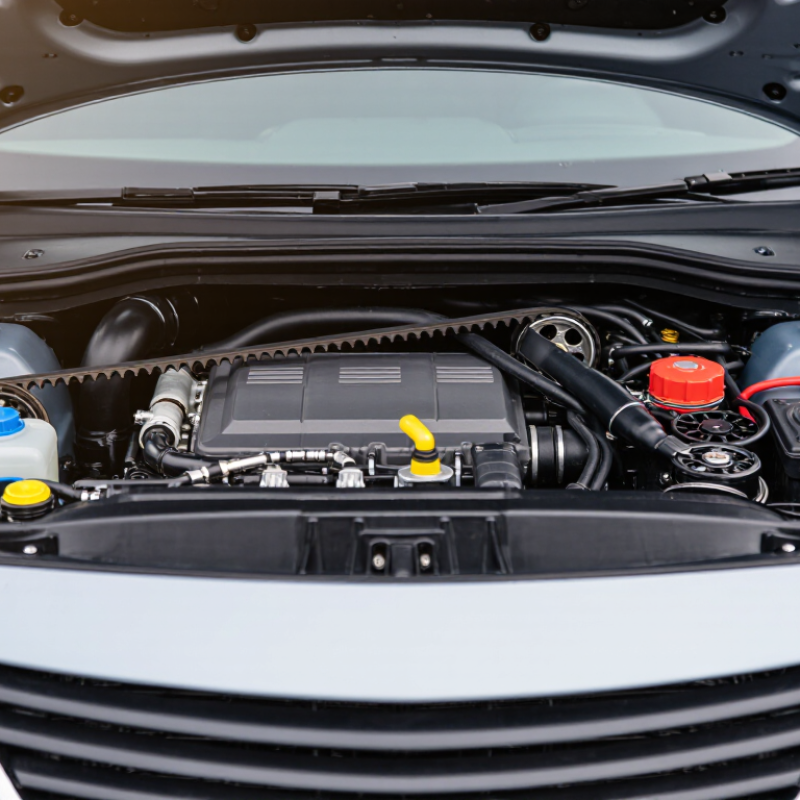
A safe engine inspection should follow risk, not convenience. NHTSA reported more than 1,000 vehicle recalls affecting approximately 35 million vehicles in 2023. Recall patterns often involve fire risks, fuel leaks, stalling, and sudden power loss. Check the vehicle identification number in NHTSA’s recall database before opening the hood.
Start with the engine cold. Look beneath the vehicle for fresh oil, coolant, or fuel. Smell carefully. Do not touch an unknown fluid. Inspect the oil level, coolant reservoir, battery terminals, belts, and hoses. Cracked rubber and white coolant residue deserve attention. A clean driveway proves little. Some leaks appear only under pressure.
Then start the engine and listen from outside the vehicle. Watch for extended cranking, uneven idle, knocking, smoke, or warning lights. NHTSA complaint and investigation records commonly document stalling, loss of power, overheating, and oil-related failures. Scan diagnostic codes before clearing anything. A road test should come last, with safe visibility and an immediate exit route. Stop if the temperature rises, the oil-pressure warning appears, or braking feels abnormal. My order is practical, but imperfect; a quiet engine can still hide internal wear. Independent service records and a qualified technician’s compression or leak-down test provide stronger evidence than sound alone.
An engine check should begin with three quiet questions: Is the oil correct, is coolant stable, and is anything leaking? ASE-aligned service practice relies on vehicle-specific service information, not one universal fluid level or interval. Park on level ground, let the engine cool, then read the dipstick twice. Oil should sit between the marked lines. Too low can reduce lubrication; too high can also create problems. Record the date and mileage. That small habit exposes gradual consumption.
Inspect coolant only when cold. Look for a stable level, clean color, and crusty residue around the reservoir, hoses, radiator area, or water-pump region. Never open a hot cooling system. Temperature warnings deserve prompt professional testing, because a gauge can look normal before damage becomes obvious. Leaks leave evidence: fresh drops, wet seams, or a sweet smell after parking. Color helps, but it is not a diagnosis.
Industry data explains why this discipline matters. The 2019 Vehicle Health Index placed the average check-engine repair at about $381.59. That figure is not an engine-failure forecast, but delayed attention can turn a minor fault into a larger repair. The Bureau of Transportation Statistics reported an average U.S. vehicle age of about 12.5 years in 2023. Older vehicles often hide problems. I have also seen clean oil create false confidence; coolant loss may be the more urgent clue. Service records, pressure testing, and scan data should confirm the visual inspection. Human judgment is useful, yet it is not infallible.
10 Best Engine Checks: What Common Engine Issues to Look For?
Roadside breakdown findings consistently place battery failure among the most common reasons drivers need assistance. A 2023 national roadside-assistance report recorded tens of millions of service requests, with starting problems forming a significant share. Test the battery before winter or long trips. A healthy 12-volt battery usually measures about 12.6 volts when fully charged. Below 12.4 volts deserves attention. Check the terminals for white corrosion, loose clamps, or dampness. Small faults become expensive surprises.
Belts and hoses need equal attention. The U.S. Department of Energy reports that correct vehicle maintenance can improve fuel economy by roughly 10 percent in some cases. A cracked serpentine belt may squeal near the pulley, while shiny edges can signal slipping. Press coolant hoses only when the engine is cold. They should feel firm, not brittle or spongy. Look for dried coolant, oil stains, and swollen sections. Do not ignore a faint sweet smell.
I have found that visual checks miss problems in poor lighting. Use a flashlight. A 2024 vehicle-maintenance survey from a leading automotive service research group found that delayed maintenance remains common among drivers, often because symptoms appear gradually. That finding is uncomfortable, but realistic. Battery voltage can seem normal after driving, while the battery still fails under load. Request a professional load test before replacing parts. Keep inspection notes, including mileage and dates. Small records improve judgment.
| No. | Engine Check | What to Inspect | Healthy Indication | Common Warning Signs and Recommended Action |
|---|---|---|---|---|
| 1 | Battery and Starting System | Check the battery case, terminals, cables, and engine cranking performance. A fully charged 12-volt battery typically measures about 12.6 volts at rest, although readings vary with temperature and battery condition. | Terminals are clean and secure; the engine starts promptly without slow cranking or repeated clicking. | Corrosion, a swollen case, dim lights, or slow cranking can indicate a weak battery or connection. Have the battery and charging system tested before replacement. |
| 2 | Serpentine Belt | Inspect the belt for cracks, fraying, glazing, missing ribs, contamination, and incorrect tension. Listen for squealing during startup or acceleration. | The belt has an even surface, no damaged ribs, and runs smoothly without excessive noise or vibration. | A slipping, frayed, or oil-soaked belt can stop the alternator, water pump, or other accessories on vehicles that use a belt-driven design. Replace it if damaged. |
| 3 | Coolant Hoses | Examine upper and lower radiator hoses, heater hoses, clamps, and connection points only when the engine is cool. | Hoses feel firm but flexible, with no swelling, splits, soft spots, or visible coolant residue. | Bulges, cracks, a collapsed hose, or dried coolant deposits suggest leakage or deterioration. Repair leaks promptly to reduce overheating risk. |
| 4 | Engine Oil Level and Condition | Park on level ground, allow the engine to cool or follow the vehicle manual, then check the dipstick and look for leaks around the engine. | Oil is between the marked range and the level does not fall noticeably between scheduled services. | A low level, strong fuel smell, milky appearance, metal particles, or repeated oil spots requires professional diagnosis. Do not overfill. |
| 5 | Coolant Level and Temperature | Check the expansion tank level when the engine is cold and monitor the temperature gauge during operation. | The coolant is within the cold-level markings, the temperature remains in its normal operating range, and no warning light appears. | Overheating, repeated coolant loss, steam, or a sweet smell may indicate a leak, thermostat problem, radiator issue, or water-pump fault. Stop safely if overheating occurs. |
| 6 | Fluid and Vacuum Leaks | Look under the vehicle and around the engine for oil, coolant, fuel, brake fluid, power-steering fluid, or clear water from normal air-conditioning drainage. | No unexplained colored or oily puddles, wet fittings, or persistent fluid stains are present. | Fuel odor, active dripping, or fluid near hot exhaust components requires immediate attention. A hissing sound or rough idle may point to a vacuum leak. |
| 7 | Warning Lights and Diagnostic Codes | Confirm that the oil-pressure, temperature, battery, and check-engine lights illuminate briefly during the self-test and then turn off after starting. | No warning light remains on while the engine is running, and there are no stored or pending fault codes during a scan. | A flashing check-engine light can indicate a severe misfire that may damage the catalytic converter. Reduce driving and obtain diagnostic help promptly. |
| 8 | Air Filter and Intake System | Inspect the air filter, intake duct, clamps, and sensor connections for blockage, cracks, loose fittings, or water intrusion. | The filter is reasonably clean, the intake duct is sealed, and the engine idles smoothly without unmetered-air symptoms. | A heavily restricted filter, split duct, or loose clamp can cause poor acceleration, rough running, or increased fuel consumption. Replace or repair as needed. |
| 9 | Spark Plugs and Ignition | Review the service interval and inspect accessible plugs and ignition components for wear, oil contamination, damaged insulation, or loose connections. | The engine starts easily, idles smoothly, and accelerates without hesitation or misfire. | Hard starting, shaking, poor acceleration, or increased fuel use may result from worn plugs, ignition faults, or fuel-system problems. Diagnose before replacing parts. |
| 10 | Unusual Noise, Smoke, and Odor | Listen at startup and while idling for knocking, tapping, grinding, squealing, or hissing. Observe exhaust color and unusual smells. | The engine runs with a consistent sound, without persistent smoke, burning odors, or abnormal vibration. | Persistent blue, white, or thick black smoke, deep knocking, grinding, or a burning smell should be investigated promptly. Stop driving if the noise is severe or oil pressure drops. |
Safety note: Inspect belts, hoses, and fluids with the engine switched off and cool whenever possible. Keep hands, clothing, and tools away from moving parts, fans, and hot surfaces.
When an engine feels rough, I do not guess from sound alone. I connect a compliant OBD-II scanner and follow diagnostic services defined by SAE J1979. The scan may show stored, pending, or permanent diagnostic trouble codes. It can also display freeze-frame data. This snapshot may reveal coolant temperature, engine speed, and load when the fault appeared. Read the code carefully. A code points toward a system, not always a failed part.
For a practical ten-point check, I review misfire data, fuel-trim values, oxygen-sensor readings, coolant temperature, intake pressure, throttle position, engine RPM, charging voltage, evaporative-system results, and readiness monitors. Live data matters. A warm engine with stable fuel trim differs from a cold-start reading. I also inspect loose connectors, cracked hoses, oil level, and damaged wiring. The scanner cannot see those faults.
After repairs, I record the original codes before clearing them. Clearing codes too early can erase useful evidence and reset readiness monitors. A complete drive cycle may be needed before checking again. My first interpretation is not always right. A lean code can involve an intake leak, weak fuel delivery, or a sensor problem. I compare the code with symptoms, test results, and service information. No scan is perfect.
A dependable engine inspection should cover ten practical checks: cold-start behavior, warning lights, oil level, coolant level, fluid leaks, exhaust smoke, belt condition, battery voltage, diagnostic codes, and road-test performance. Listen for tapping, knocking, or uneven idling. A sweet exhaust smell may suggest coolant entering combustion. Blue smoke often points to oil burning, while black smoke can indicate excessive fuel.
Repair decisions become clearer when fault-trend data is matched with independent repair-cost reports. Frequent codes can reveal patterns, such as ignition misfires, oxygen-sensor faults, or cooling-system problems. Cost data helps separate a manageable sensor replacement from a major internal-engine repair. Regional labor rates, vehicle age, and part quality can change the final estimate, so treat published figures as guidance, not promises.
I have found that a scan result is only a starting point. A stored code does not always identify the failed part. A technician should confirm it with voltage checks, pressure tests, and a careful visual inspection. I once focused too quickly on a misfire code and nearly missed a cracked intake hose. Small details matter. A trembling idle, damp hose connection, or thin oil film near a gasket can influence repair priority. Address safety-related overheating or severe oil loss quickly, then compare less urgent faults against likely costs and driving needs.
These broad reference intervals help prioritize preventive engine checks. Actual schedules vary by vehicle, engine design, driving conditions, and manufacturer requirements; always inspect sooner when warning signs appear.
Shorter intervals generally deserve earlier attention. Oil and filter service is usually the highest-priority routine check, while timing-belt replacement is critical when the specified mileage or age limit is reached.
It may show stored, pending, or permanent fault codes. Freeze-frame data records engine conditions when the fault appeared. Check coolant temperature, engine speed, and engine load. The code identifies a system, not always a failed part.
Live data shows the engine’s current behavior. Warm-engine fuel trim differs from cold-start readings. Review oxygen-sensor values, intake pressure, throttle position, and charging voltage. Context matters.
Inspect loose connectors, cracked hoses, damaged wiring, oil level, and fluid leaks. Check coolant level and belt condition. Look for blue, black, or unusual exhaust smoke. The scanner cannot see everything.
Not necessarily. A misfire may involve ignition, fuel delivery, compression, or an intake leak. A trembling idle and cracked hose can appear together. Test before replacing parts.
Record the original codes and freeze-frame details first. Clearing them early can erase useful evidence. It can also reset readiness monitors. I once trusted a quick reset too soon.
Use fault trends and independent cost information as general guidance. Labor rates, vehicle age, location, and part quality affect the final price. A sensor repair may cost less than internal engine damage. Estimates are not promises.
Address overheating, severe oil loss, and major fluid leaks quickly. Watch for rising temperature, a low oil level, or heavy smoke. Do not ignore them. Safety comes first.
A complete drive cycle may be needed before checking readiness monitors again. Observe starting, idling, acceleration, and warning lights. Recheck the system after normal driving. My first interpretation may be wrong.
A thorough engine inspection should follow a safe, logical order, beginning with visible warning signs and any known safety or reliability concerns. What are common engine issues to look for? Focus on low or dirty oil, coolant loss, fluid leaks, overheating, unusual noises, smoke, and poor starting performance. These symptoms may indicate worn seals, damaged gaskets, lubrication problems, or cooling-system faults.
Next, examine the battery, drive belts, and hoses for corrosion, cracks, looseness, or swelling. A diagnostic scan can reveal stored fault codes and help identify issues involving sensors, ignition, fuel delivery, or emissions systems. Finally, prioritize repairs according to urgency, safety impact, likely failure risk, and estimated cost. Address overheating, severe leaks, and starting or charging problems first, then handle less critical maintenance. Recording inspection results and monitoring recurring symptoms can help prevent minor engine faults from becoming expensive repairs.
