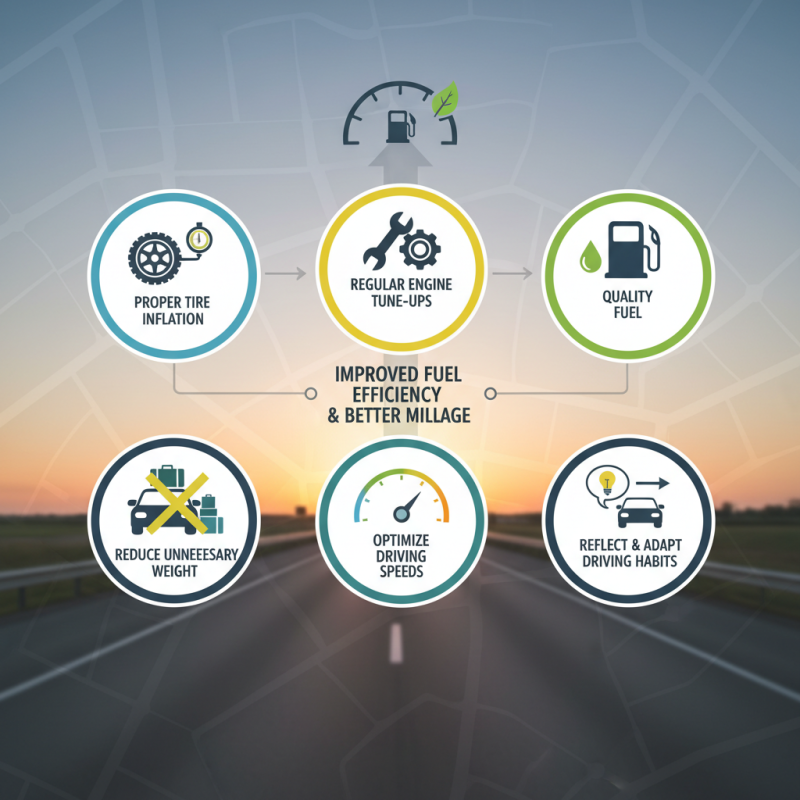
Fuel efficiency is a critical aspect of modern driving. Many drivers are interested in how to improve engine fuel efficiency. A few simple adjustments in driving habits or vehicle maintenance can lead to noticeable gains.
For instance, keeping your tires properly inflated can greatly affect your mileage. An under-inflated tire can add unnecessary drag. Likewise, regular engine tune-ups can ensure your vehicle runs optimally. However, not everyone pays attention to these factors. Many overlook the importance of regular checks.
When it comes to improving your vehicle’s performance, even small changes make a difference. Using quality fuel, reducing unnecessary weight, or optimizing driving speeds are common strategies. However, many drivers tend to be unaware of these tips. As a result, they miss opportunities for better fuel economy. Reflecting on what changes can be made is crucial for all drivers.
Tips for Regular Vehicle Maintenance and Its Impact on Fuel Efficiency
Regular vehicle maintenance is crucial for optimizing fuel efficiency. Neglected cars often consume more fuel. For instance, a dirty air filter can decrease fuel efficiency by up to 10%. This means that simple acts like replacing filters regularly can lead to better mileage, suggesting that even small changes matter.
Tips to enhance your vehicle’s efficiency include checking tire pressure often. Under-inflated tires can reduce fuel efficiency by 3%. Regular oil changes using the right grade can also play a significant role. Using the manufacturer-recommended oil can avoid unnecessary strain on the engine. This might seem trivial, but it has a real impact.
Brake systems should not be overlooked. If brakes drag, they create resistance, thus wasting fuel. Regular inspections can prevent these issues. When vehicles are well-maintained, the benefits extend beyond savings. They promote safety and contribute to a cleaner environment. However, people often skip maintenance, considering it an extra cost, which can lead to higher fuel expenses in the long run. Balancing immediate cost and long-term savings is essential as careless neglect can be costly.
Understanding Engine Load and Its Effect on Fuel Consumption Rates
Engine load is a crucial factor influencing fuel consumption rates. As the load on the engine increases, fuel efficiency typically decreases. For example, a study by the SAE (Society of Automotive Engineers) found that fuel consumption could rise by as much as 25% under heavy load conditions. This means that maintaining a moderate load is beneficial for better mileage.
Understanding how engine load works is essential. When driving uphill or carrying heavy loads, the engine requires more power. This increased demand leads to higher fuel consumption. Many drivers overlook this aspect, focusing only on speed or driving habits. Having a practical understanding can lead to better choices, like reducing cargo weight. Opting for lighter materials can make a marked difference.
In urban driving scenarios, stop-and-go traffic increases engine load. This inefficient driving pattern can significantly impact fuel economy. Even short trips can lead to worse mileage due to constant acceleration. Reflecting on driving habits is essential. Are you often in traffic? If so, the cumulative effect on fuel consumption can be surprising. Adjusting driving times or routes may yield better results.
Role of Tire Pressure in Maximizing Fuel Economy: Industry Standards
Maintaining optimal tire pressure is crucial for maximizing fuel economy. According to the U.S. Department of Energy, under-inflated tires can lower fuel efficiency by 0.2% for every PSI lower than the recommended level. This may not sound like much, but it can add up significantly over time, costing drivers additional dollars at the pump.
Many vehicle owners overlook this simple maintenance task. A tire that is even 10 PSI low can reduce fuel economy by 4% to 5%. This is a reflection of our busy lives, where regular checks can be easily forgotten. Industry standards recommend checking tire pressure at least once a month and before long trips. Despite this, a survey from the Rubber Manufacturers Association found that roughly 25% of drivers have at least one under-inflated tire.
Imagine driving 20,000 miles per year. If your tires are under-inflated by 10 PSI, you could waste several gallons of fuel annually just because of neglect. Maintenance tasks like these often fall by the wayside. However, being mindful of tire pressure can lead to tangible benefits. Properly inflated tires boost safety, prolong tire life, and enhance fuel efficiency—all important for both your wallet and the environment.
Impact of Driving Behavior on Fuel Efficiency: Data from Vehicle Studies
Driving behavior significantly impacts fuel efficiency. According to the U.S. Department of Energy, aggressive driving can decrease fuel economy by up to 33%. Rapid acceleration and hard braking consume more fuel than steady driving. Maintaining a consistent speed is crucial. Studies show that using cruise control on highways can improve efficiency by about 15%. Yet, many drivers still overlook this simple technique.
Moreover, idling consumes fuel unnecessarily. The U.S. Environmental Protection Agency reports that idling for just 10 seconds uses more fuel than restarting the engine. Many drivers think stopping the car wastes fuel, but that's a common misconception. It's essential to develop better habits, such as turning off the engine when parked.
Maintaining proper tire pressure is another critical factor. Under-inflated tires can decrease fuel efficiency by 0.2% for every 1 psi drop. Regular checks could save you significant fuel costs over time. Many drivers fail to recognize these details. They often ignore basic maintenance, which can lead to poorer gas mileage and higher expenses. The road to better fuel efficiency starts with individual accountability.
Alternative Fuels and Their Benefits for Improved Engine Performance
Alternative fuels offer a promising path to better engine performance.
Biofuels, for example, are made from renewable resources.
They can reduce emissions compared to traditional fuels. This transition may seem daunting but has significant benefits.
Switching to biofuels can enhance overall fuel efficiency. Many engines operate more smoothly on these alternatives.
Electric and hydrogen fuels are also gaining traction.
Electric vehicles (EVs) show remarkable improvements in mileage.
They use energy more efficiently than combustion engines.
Hydrogen fuel cells generate power with water as the only byproduct.
However, infrastructure for these alternatives still needs development. The transition may come with challenges, like availability and range anxiety.
Adopting alternative fuels requires a shift in mindset. While they promise better performance, some may hesitate due to perceived costs.
Converting existing engines could also pose questions. Yet, these fuels potentially offer a cleaner future.
Embracing them may lead to lasting improvements in our environment.
The road to better mileage begins with our choices today.
FAQS
: The program aims to enhance community engagement. It encourages participation in local events.
Anyone from the community can join. Age and skill level do not matter.
Most activities are free. Some events may have a small fee.
Keep an eye on community boards. Follow local social media pages for updates.
You can still participate. Everyone has something valuable to offer.
No, you can join as many as you want. Your involvement is completely flexible.
Families are welcome. It’s a great way to spend time together.
Inform the organizers in advance. They appreciate communication and understanding.
Success is about participation levels. Community feedback helps improve future efforts.
Yes, volunteers can take the lead. It’s a fantastic opportunity to share talents.
Conclusion
Improving engine fuel efficiency is essential for both environmental sustainability and cost savings for vehicle owners. Regular vehicle maintenance, including timely oil changes and air filter replacements, plays a significant role in enhancing fuel economy. Understanding the impact of engine load on consumption rates helps drivers optimize their vehicle usage to avoid unnecessary fuel expenditure.
Tire pressure is another critical factor; maintaining industry-standard levels can significantly enhance mileage. Furthermore, driving behavior, such as smooth acceleration and maintaining steady speeds, greatly affects fuel efficiency, as shown by various vehicle studies. Lastly, exploring alternative fuels can lead to improved engine performance and lower emissions. Overall, knowing how to improve engine fuel efficiency encompasses a holistic approach that includes maintenance, driving habits, and fuel choices.
 Dominion Parts