 Dominion Parts
Dominion Parts
Dominion Parts
A smooth engine is rarely the result of luck. It reflects small, repeated decisions made before warning lights appear. The guide “How to keep engine running smoothly” will examine practical maintenance habits that protect performance, fuel economy, and reliability. It will focus on oil quality, coolant levels, air filters, spark plugs, belts, and sensible driving.
Rich White, former executive director of the Car Care Council, said, “Preventive maintenance is the key to keeping your vehicle running smoothly.” That principle remains useful because engines respond to neglect in quiet ways. Dirty oil may darken quickly. A weak battery can make morning starts feel unusually slow. A cracked hose may leave a small, sweet-smelling stain beneath the vehicle.
Check the owner’s manual.
Use the correct oil grade and change interval. Inspect fluid levels on a cool engine, with the vehicle parked on level ground. Listen for new tapping, squealing, or uneven idling. These details can reveal trouble earlier than a dashboard warning.
However, maintenance advice is not universal. A turbocharged engine, an older diesel, and a hybrid powertrain need different care. Climate, traffic, towing, and short trips also change service needs. It is easy to assume that “clean” oil means everything is fine. That assumption can fail.
This introduction will connect manufacturer guidance with practical inspection habits. It will also encourage professional diagnosis when symptoms persist. A careful owner does not guess for too long. Small checks matter. Their value becomes clearest when the engine starts quietly, runs evenly, and reaches its destination without drama.
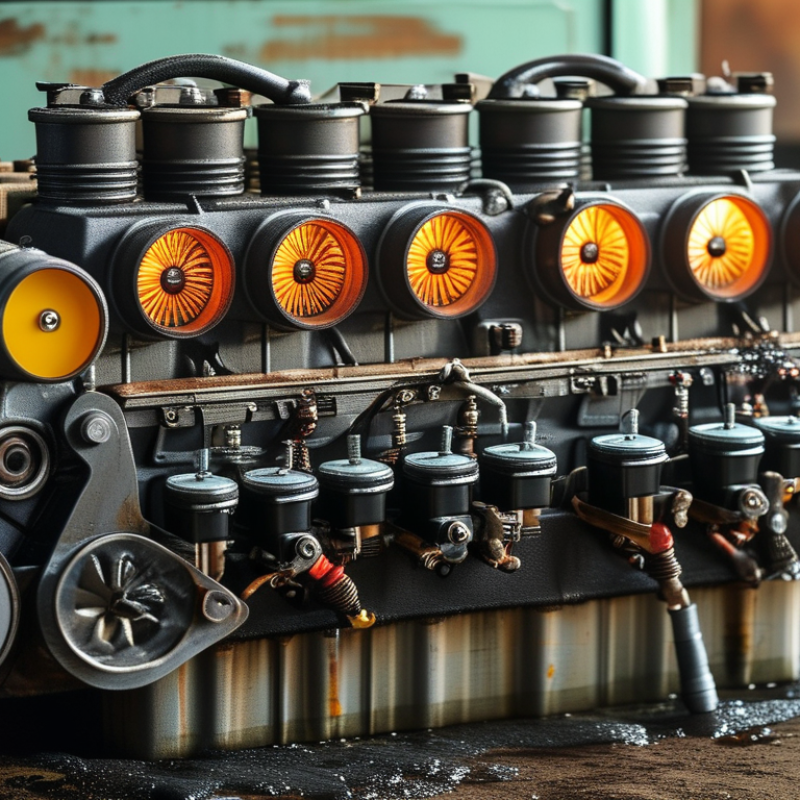
How to Keep Your Engine Running Smoothly
Assess Engine Health with OBD-II Diagnostics and Manufacturer Service Data
A smooth engine rarely announces trouble with dramatic noise. Small changes matter. A rough idle, slower starting, or a faint fuel smell deserves attention. An OBD-II scanner can reveal stored fault codes and live readings. Check coolant temperature, fuel trim, engine speed, and oxygen-sensor data. Record the values before clearing anything. Clearing codes too early can erase useful evidence.
Codes are clues, not final diagnoses. I have seen a misfire code lead to a worn plug, a vacuum leak, or weak wiring. Compare scan results with the vehicle’s manufacturer service data. Use specified resistance ranges, pressure tests, inspection steps, and repair limits. This information gives a technician a defensible path instead of guesswork. A qualified technician should confirm the cause with physical tests. Do not replace expensive parts on code numbers alone.
Keep a dated log of mileage, symptoms, codes, and repairs. Patterns often appear after several drives. After service, scan again and complete a controlled road test. Watch for returning codes, unstable idle, unusual temperatures, or changing fuel trims. My own early checks were sometimes too narrow. I once blamed the sensor before checking its connector. That mistake still shapes my process. Good diagnostics require patience, accurate data, and willingness to reconsider the first answer.
| Diagnostic Dimension | OBD-II Data or Service Record | Healthy Reference Condition | Warning Signs | Recommended Assessment | Maintenance Action |
|---|---|---|---|---|---|
| Diagnostic Trouble Codes | Stored, pending, and permanent fault codes | No active or pending emissions-related codes; permanent codes are absent after repairs and completed drive cycles | Repeated code returns, multiple unrelated codes, or a flashing malfunction indicator lamp | Record all codes and freeze-frame data before clearing anything | Follow the vehicle-specific diagnostic procedure instead of replacing parts based on the code description alone |
| Readiness Monitors | Completed and incomplete emissions self-tests | Monitors are complete after normal operating conditions and the required drive cycle | Several monitors remain incomplete, especially after a recent battery disconnect or code reset | Check whether the vehicle has completed the manufacturer-defined drive cycle | Repair the underlying issue and complete the required drive cycle; do not use monitor resets to hide a fault |
| Engine Coolant Temperature | Live coolant-temperature sensor reading | After warm-up, commonly about 85–105°C (185–221°F), depending on vehicle design and ambient conditions | Temperature stays unusually low, rises slowly, or exceeds the specified operating limit | Compare the scan-tool reading with the instrument display and the service specification | Inspect coolant level, leaks, thermostat operation, temperature sensor accuracy, and cooling-fan control |
| Engine Oil Level and Condition | Dipstick reading, oil-life data, service interval, and maintenance history | Oil level is within the marked range; oil grade and change interval match the service schedule | Low level, fuel or coolant contamination, metallic particles, or overdue service | Check the level on a level surface with the engine off for the time specified by the service procedure | Correct leaks, use the specified oil viscosity and performance class, and replace the filter at the scheduled interval |
| Long-Term Fuel Trim | LTFT percentage at warm idle and steady cruise | Generally near 0%; a small positive or negative correction is expected and must be interpreted by engine design | Sustained high positive trim suggests a lean condition; sustained high negative trim suggests a rich condition | Compare short- and long-term trims at idle and under load, while checking for related codes | Inspect for vacuum leaks, intake leaks, fuel-pressure problems, injector faults, and inaccurate airflow or oxygen-sensor signals |
| Oxygen or Air-Fuel Sensor Feedback | Sensor voltage, equivalence ratio, or commanded and measured lambda | Sensor feedback changes as the control system adjusts the mixture, or follows the specified lambda target | Fixed readings, slow response, implausible values, or a persistent mixture-control fault | Test the sensor with live data and verify wiring, exhaust leaks, and fuel-control conditions | Repair air or exhaust leaks first; replace a sensor only after confirming the circuit and related systems |
| Intake Air Measurement | Mass airflow, manifold pressure, intake temperature, and calculated load | Values change smoothly with engine speed and load and remain consistent with the service data | Erratic readings, implausible load values, contamination, or a mismatch between airflow and engine speed | Compare readings at idle, steady cruise, and acceleration; inspect the air filter and intake tract | Repair unmetered-air leaks and clean or replace components only according to the applicable service procedure |
| Ignition Timing and Misfire Data | Misfire counters, ignition timing, crankshaft-speed variation, and related codes | No persistent misfire counts and stable engine operation at idle and under load | Repeated misfires, rough running, loss of power, or a flashing malfunction indicator lamp | Determine whether the misfire follows the spark plug, ignition coil, injector, or cylinder | Inspect plugs, coils, injectors, compression, valve timing, and unmetered air before authorizing major repairs |
| Battery and Charging Voltage | System voltage measured with the engine off and running | A fully charged 12-volt battery is commonly near 12.6 V at rest; charging voltage is often approximately 13.5–14.8 V, subject to vehicle strategy | Low resting voltage, unstable charging voltage, or voltage outside the specified control range | Test after the vehicle has been parked and under electrical load; compare with the service specification | Inspect battery condition, terminals, grounds, drive belt, charging control, and alternator output |
| Fuel Pressure | Measured low- or high-side fuel pressure and commanded pressure, where available | Pressure reaches and holds the value specified for the engine and fuel system | Slow pressure build-up, excessive pressure drop, unstable pressure, or a mismatch with commanded pressure | Use the approved gauge or scan-tool procedure and follow all fuel-system safety requirements | Check the pump, filter, regulator, injectors, wiring, and fuel supply before replacing components |
| Service Interval Compliance | Time, distance, engine hours, severe-use history, and completed maintenance items | Oil, filters, spark plugs, belts, coolant, and other items are serviced within the applicable schedule | Overdue items, missing records, repeated short trips, towing, dusty conditions, or extended idling | Use the vehicle-specific maintenance schedule and classify operating conditions accurately | Perform overdue maintenance, document parts and fluids used, and reset service reminders only after completion |
| Post-Repair Verification | Cleared codes, completed monitors, road-test results, and repeat scan data | The original symptom is resolved, no relevant codes return, and monitors complete normally | The fault returns, monitors will not complete, or live data remains outside the specified range | Repeat the same operating conditions that produced the original fault and rescan the vehicle | Record the final results and schedule further diagnosis when the repair has not been verified |
| Important: OBD-II parameters and acceptable limits vary by engine, model year, fuel system, emissions standard, and operating condition. Always use the vehicle-specific manufacturer service data as the final reference. | |||||
Check it around 15,000–30,000 miles, especially after dusty driving. Hold it toward a work light. If little light passes through, replacement is sensible.
Older carbureted vehicles may accelerate better after replacement. Modern fuel-injected engines may show little fuel-economy improvement. Performance matters more than promises.
Many spark plugs last 30,000–100,000 miles. The correct interval depends on plug construction, engine design, and driving conditions. Follow the vehicle’s maintenance schedule.
Rough idling, hard starting, and misfires deserve prompt investigation. Fresh plugs may restore a clean idle. They cannot repair a failing ignition coil or damaged wiring.
A 50:50 mixture may protect near −37°C, or −35°F. The formula must support that ratio. Some cooling systems require different concentrations.
Let the engine cool completely before checking. Use a refractometer or coolant hydrometer. Never open a hot cap.
Watch for falling levels, soft hoses, crusty deposits, or oily film. Small leaks may appear near warm clamps. A dry driveway proves very little.
Pull over safely if steam appears or the gauge reaches its danger zone. Stop the engine when an oil-pressure warning appears. Check oil on level ground after slight cooling. Do not guess.
How to keep engine running smoothly begins with regular checks and timely maintenance. Use OBD-II diagnostics and manufacturer service data to assess engine health, identify stored fault codes, and follow the recommended inspection schedule. Choose engine oil that meets API SP or ILSAC GF-6 standards in the viscosity approved for your vehicle. Replacing oil and air filters, along with spark plugs, within typical intervals of 30,000 to 100,000 miles can support efficient combustion and dependable performance.
The cooling system also deserves close attention. Maintain a roughly 50:50 mixture of coolant and water to provide protection near −37°C (−35°F), while checking the level and condition periodically. Monitor engine temperature, oil pressure, and dashboard warning lights, since unusual readings or alerts may signal a developing problem. Addressing these signs early, rather than continuing to drive under stressful conditions, can help prevent more serious damage and keep the engine operating smoothly for longer.
