Dominion Parts
Why does my engine lose power suddenly? The answer can be simple, but it is rarely obvious from the driver’s seat. A car may hesitate while climbing a hill, shake at a traffic light, or refuse to accelerate when the pedal is pressed. The dashboard might show a warning light. Sometimes, it shows nothing at all.
Automotive training expert Tom Denton has said, “Good diagnosis begins with evidence, not assumptions.” That principle matters here. A weak fuel pump, clogged filter, failing ignition coil, restricted air intake, or faulty sensor can create similar symptoms. A blocked catalytic converter may make the engine feel strangled. Overheating can also force the vehicle into reduced-power mode. The cause is not always dramatic.
A careful check should begin with safety. Move away from traffic if the vehicle loses power suddenly. Look for smoke, burning smells, unusual engine noise, or a rising temperature gauge. Then inspect stored diagnostic codes with a reliable scan tool. A technician may test fuel pressure, ignition performance, airflow, and battery voltage before replacing parts. This approach costs time, but random parts replacement costs more.
The uncomfortable truth is that intermittent faults can disappear before inspection. That makes diagnosis frustrating. It also means a short video, a note about speed, and the engine temperature can help. Do not ignore repeated power loss. One small hesitation can become a stalled vehicle at a dangerous intersection.
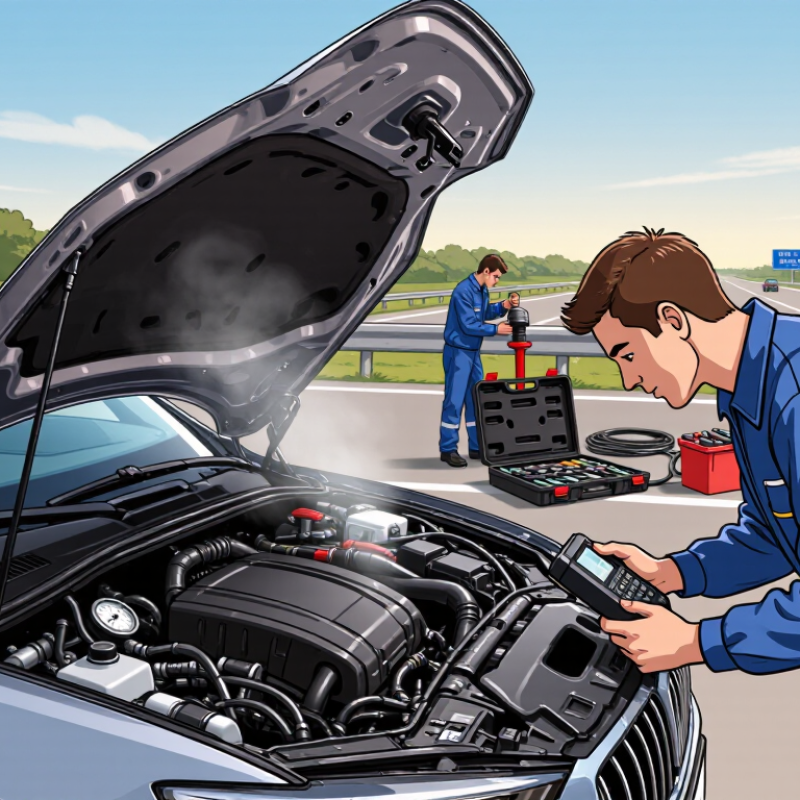
Why Does My Engine Lose Power Suddenly? Top Causes and Fixes
Sudden power loss means the engine cannot produce expected torque during acceleration. The 14.7:1 air–fuel ratio is a useful gasoline baseline. It means 14.7 parts air mix with one part fuel by mass. At this point, combustion is theoretically balanced. It is often called the stoichiometric ratio.
That ratio is not a permanent target. Under heavy acceleration, many gasoline engines use a richer mixture for cooling and stronger combustion. During cruising, the control system may stay near 14.7:1. A failed oxygen sensor, dirty airflow sensor, weak fuel pump, or blocked filter can disturb this balance. The result may feel like hesitation, shaking, or a sudden drop in power. Sometimes, the engine runs too rich instead.
Check the evidence before replacing parts. A scan tool can reveal fuel trims, misfire counts, and sensor readings. Positive fuel trim may suggest insufficient fuel or unmeasured air. Negative trim can point toward excess fuel. I would also inspect intake hoses and test fuel pressure under load. Do not trust one reading. A sensor can report normal data while the engine still struggles. I have found this assumption easy to make, and it often delays the real diagnosis. Air leaks may appear only when the engine moves. A warm engine can behave differently from a cold one. The 14.7:1 baseline helps guide testing, but it cannot explain every power-loss event.
Why Does My Engine Lose Power Suddenly? Top Causes and Fixes
A sudden loss of engine power often begins with inadequate fuel delivery. Check fuel pressure before replacing expensive parts. Use a calibrated gauge and compare the reading with the vehicle manufacturer’s OEM specifications. Do not guess from engine sound alone. Test pressure with the ignition on, while idling, and during acceleration if safe. A weak pump may show normal pressure at idle but collapse under load. That difference matters.
Inspect the fuel filter, pump wiring, pressure regulator, and fuel lines. Restricted filters can starve the engine during hill climbs or highway merging. Check the electrical supply at the pump, because low voltage can imitate a failing pump. I once saw a vehicle receive a new pump when a corroded connector caused the real problem. Pressure alone can mislead.
Watch how quickly pressure falls after shutdown. A rapid drop may indicate a leaking injector, faulty regulator, or a check valve problem. Confirm each possibility with additional tests before ordering parts. Keep ignition sources away, relieve fuel pressure correctly, and wear eye protection. Fuel can spray farther than expected. If pressure meets specifications, investigate airflow, ignition, and sensor signals instead. Some diagnoses take longer than expected. That is frustrating, but careful testing prevents repeated repairs.
Typical fuel-pressure ranges vary by injection system. Compare the measured pressure with the vehicle-specific OEM specification, and check pressure during key-on, cranking, idle, and under load when required.
When an engine suddenly loses power, do not replace parts by guessing. Start with stored OBD-II data. Misfire codes, such as P0300 or P0301, can show whether combustion is unstable. SAE J1979 defines standardized diagnostic services, including misfire readings and Mode $06 test results. These records matter. Freeze-frame data adds engine speed, load, coolant temperature, and fuel status. That snapshot often separates a cold-start fault from a failure under acceleration.
Check air delivery before blaming the ignition. Compare short- and long-term fuel trims at idle and 2,500 rpm. Large positive trims suggest unmetered air, restricted fuel delivery, or inaccurate airflow measurement. Negative trims may indicate excess fuel or a biased sensor. The EPA’s 2023 Automotive Trends Report recorded a 26.4 mpg average for model-year 2022 vehicles. That is fleet-level data, not a repair threshold. Still, it gives useful context.
For ignition, inspect spark plugs, coil output, and wiring. Swap one coil only when safe and appropriate. If the misfire follows the coil, that coil becomes a strong suspect. If it stays, test compression and injector operation. Do not ignore a flashing malfunction lamp. EPA OBD rules treat severe misfire as a catalyst-protection event. I have seen diagnosis stop too early. Codes guide testing; they do not prove the failed component.
| System or Cause | Typical Symptoms | Relevant OBD-II Data or Codes | Useful Diagnostic Checks | Typical Fix | Urgency |
|---|---|---|---|---|---|
| Vacuum leak or unmetered air | Rough idle, hesitation during acceleration, stalling, and a lean-running condition. | P0171 or P0174; positive long-term fuel trim, often above approximately +10% to +15% at idle. | Compare short- and long-term fuel trims at idle and at approximately 2,500 rpm. Inspect vacuum hoses, intake ducting, manifold seals, and crankcase ventilation lines. A smoke test can locate small leaks. | Replace damaged hoses or seals and securely reconnect loose intake components. Clear the codes and verify that fuel trims return closer to normal. | Medium |
| Restricted or dirty air filter | Gradual loss of power, reduced throttle response, and poor fuel economy, especially under load. | Usually no specific fault code; calculated engine load and airflow may be lower than expected during acceleration. | Inspect the filter for heavy contamination, blocked pleats, moisture, or collapse. Check that the airbox and intake path are unobstructed. | Replace the air filter with the correct specification and remove obstructions from the intake path. | Low to Medium |
| Faulty mass airflow or manifold pressure reading | Surging, hesitation, stalling after throttle opening, or inconsistent power. | P0101, P0102, P0106, or fuel-trim abnormalities. | Check live airflow or manifold-pressure readings against engine speed and load. Inspect wiring, connectors, intake leaks, and sensor contamination before replacing a sensor. | Repair wiring or air leaks, clean only with a suitable sensor cleaner when appropriate, or replace a confirmed faulty sensor. | Medium |
| Worn or fouled spark plug | Sudden hesitation, shaking under load, hard starting, reduced power, and increased fuel consumption. | P0300 for random misfire or cylinder-specific codes such as P0301 through P0308. | Review misfire counters and freeze-frame data. Remove and inspect the plug for worn electrodes, oil fouling, fuel fouling, cracking, or an incorrect gap. | Install correctly specified plugs with the prescribed gap and torque. Repair the cause of oil or coolant contamination if present. | High if the warning light flashes |
| Weak ignition coil or coil connection | Intermittent misfire, loss of power during acceleration, rough running, and possible stalling. | Cylinder-specific P030x codes; misfire counts may rise under load. Some vehicles may also store ignition-primary or secondary circuit codes. | Check coil connectors and power supply. If applicable, swap the suspected coil with another cylinder and see whether the misfire follows the coil. Do not rely on resistance testing alone. | Repair the connector or wiring, or replace the confirmed defective coil. Recheck misfire data after repair. | High if the warning light flashes |
| Low fuel pressure or restricted fuel delivery | Power loss mainly under load, difficult starting, lean operation, or engine surge at higher speeds. | P0171, P0174, fuel-pressure-related codes where supported, or misfire counts that increase during acceleration. | Measure fuel pressure under specified conditions and observe whether it drops during a loaded acceleration test. Inspect the pump circuit, filter, lines, and fuel-quality history. | Restore the correct fuel pressure by repairing the electrical supply, replacing a restricted filter where serviceable, or replacing a failed pump or regulator. | High |
| Exhaust restriction or blocked catalytic converter | Power fades at higher rpm, engine feels restricted, exhaust temperature may rise, and acceleration becomes unusually slow. | Possible P0420 or P0430; oxygen-sensor patterns may indicate reduced catalyst efficiency, but these codes do not prove a blockage. | Measure exhaust backpressure or compare intake vacuum behavior during a controlled rpm-hold test. Check for rattling, overheating, and upstream causes such as prolonged misfire. | Repair the root cause and replace the restricted exhaust component only after confirming the restriction. | High |
| Throttle body or accelerator-position fault | Delayed throttle response, limited power, unstable idle, or a vehicle entering reduced-power mode. | P0121, P0221, P2135, or related throttle-actuator codes. | Compare commanded and actual throttle position with a scan tool. Inspect the throttle body for deposits and check pedal and throttle wiring for damaged connectors. | Clean deposits when appropriate, repair wiring, perform the required relearn procedure, or replace a confirmed failed actuator or position sensor. | High |
| Engine timing or variable-valve-timing problem | Sudden or gradual power loss, poor idle quality, hard starting, and reduced performance across a wide rpm range. | P0011, P0014, P0340, or camshaft/crankshaft correlation codes such as P0016. | Check oil level and condition, compare commanded and actual cam timing, inspect control-solenoid operation, and verify mechanical timing if correlation faults remain. | Correct the oil problem, clean or replace the control solenoid, repair wiring, or correct mechanical timing after proper confirmation. | High |
| Low compression or internal engine damage | Persistent cylinder-specific misfire, rough running, hard starting, smoke, or power loss that does not follow ignition-component swaps. | Repeated P030x codes on the same cylinder; fuel trims and misfire counters may remain abnormal after air and ignition checks. | Perform a compression test followed by a leak-down test. Check for valve leakage, worn piston rings, head-gasket leakage, or abnormal cam timing. | Repair the identified mechanical fault. Avoid replacing sensors or ignition parts without confirming the mechanical condition. | High |
| Electrical supply or ground problem | Intermittent loss of power, multiple unrelated warning lights, stalling, or scan-tool communication issues. | Multiple low-voltage or communication codes; system voltage may fall below the normal charging range during operation. | Check battery terminals, engine and chassis grounds, charging voltage, voltage drop under load, and relevant fuses and relays. | Clean and tighten connections, repair damaged wiring, or service the charging system after confirming the voltage-drop source. | High |
A sudden loss of engine power often begins with incorrect sensor information. Check the mass-airflow, manifold-pressure, throttle-position, and oxygen sensors with a professional scan tool. Record readings during idle, acceleration, and a short road test. Compare the data with the vehicle’s service specifications and applicable SAE measurement conventions. SAE J1979 helps standardize diagnostic data, but it does not replace vehicle-specific limits.
Look for values that disagree with physical conditions. A pressure sensor showing heavy load at idle deserves attention. A throttle reading that jumps can indicate wiring damage, contamination, or calibration failure. Inspect connectors closely. Moisture can hide inside them. I once trusted a single scan result and missed a loose ground, so repeated testing matters.
The exhaust system also needs a pressure check. Measure backpressure before and after the converter when power drops. Excessive pressure can point to a restricted converter, crushed pipe, or damaged muffler. Compare oxygen-sensor patterns with expected operating behavior, not one fixed number. SAE test standards support consistent measurement, while service data confirms whether the result is acceptable. Check for exhaust leaks near sensor ports. They can draw in outside air and distort readings. Record temperature, engine speed, and test location; otherwise, the comparison may be misleading.
A sudden loss of engine power can come from restricted fuel flow, poor airflow, ignition faults, or overheating. A warning light may point toward a sensor or electronic control problem. However, the stored code is not always the failed part. A damaged wire, loose connector, or blocked filter can create similar symptoms. Diagnosis is rarely neat.
Park safely and switch off the engine if it smells hot, shakes badly, or shows low oil pressure. Check fluid levels, visible hoses, battery connections, and the air filter only when the engine is cool. Do not reach near moving belts. A qualified technician should test fuel pressure, ignition output, intake leaks, and sensor signals before replacing parts. Guessing can become expensive. It can also hide a dangerous fault.
After the repair, start the engine and watch for warning lights, uneven idle, leaks, or unusual smoke. Let it reach normal temperature while stationary. Then take a short road test on a quiet route with clear visibility. Accelerate gently, check braking response, and confirm steady power during uphill driving. Do not test at high speed. Stop immediately if power drops again, the temperature rises, or new noises appear. Review the scan data afterward, because a smooth first drive does not prove every problem is fixed.
It means the engine cannot produce expected torque during acceleration. The vehicle may hesitate, shake, or slow unexpectedly.
It means 14.7 parts air mix with one part gasoline by mass. This is a useful combustion baseline.
No. Engines may use richer mixtures during heavy acceleration for cooling and stronger combustion. It is only a guide.
A faulty oxygen sensor, dirty airflow sensor, weak fuel pump, or blocked filter may cause trouble. Air leaks can also matter.
Not always. A damaged wire, loose connector, or blocked filter can create similar codes. Check the evidence carefully.
Use scan data to review fuel trims, misfire counts, and sensor readings. Test fuel pressure under load and inspect intake hoses.
Positive trim may indicate insufficient fuel or unmeasured air. Negative trim may suggest excess fuel. One reading cannot prove the cause.
Move to a safe place and switch off the engine if it smells hot, shakes badly, or shows low oil pressure. Do not reach near moving belts.
Watch for warning lights, uneven idle, leaks, and smoke. Then take a short, gentle road test on a quiet route.
Stop if power drops again, temperature rises, or new noises appear. Review scan data afterward. A smooth first drive may not prove the repair worked.
Why does my engine lose power suddenly? A sudden drop in engine performance usually indicates an imbalance in fuel, air, ignition, or exhaust flow. Begin by defining the symptoms and considering the normal air–fuel ratio baseline of approximately 14.7:1 for gasoline engines. Then check fuel delivery by measuring fuel pressure and comparing the result with the vehicle manufacturer’s specifications. Insufficient pressure may point to a restricted filter, weak pump, or injector problem.
Next, use an OBD-II scanner to review misfire data and identify possible ignition or air-intake faults. Inspect spark components, hoses, and intake passages for damage or leaks. Sensors should also be checked for readings that fall outside expected SAE-based operating ranges, while a restricted exhaust system can be evaluated through pressure and performance tests. After completing safe repairs, clear relevant fault codes, start the engine, and perform a careful road test. Confirm that acceleration, idle quality, and power delivery have returned to normal before considering the repair complete.
