Dominion Parts
Dominion Parts
Dominion Parts
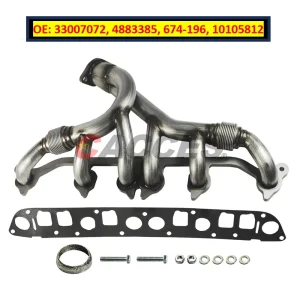
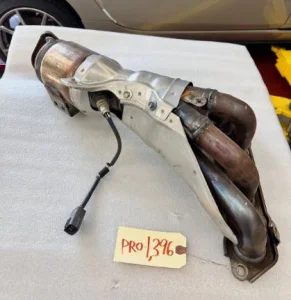
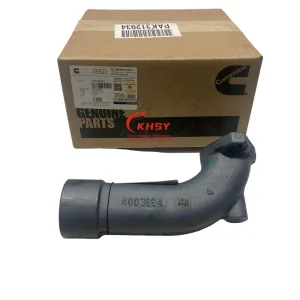
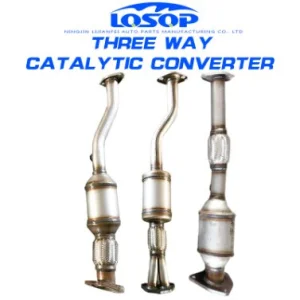
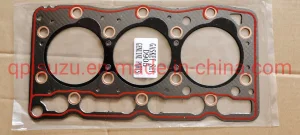
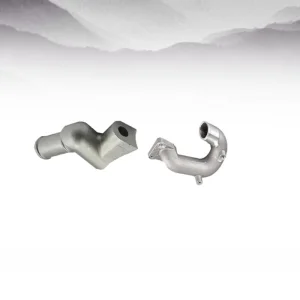
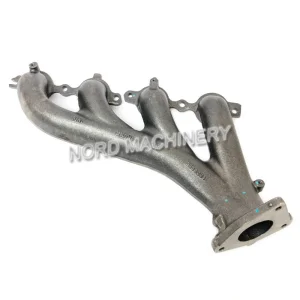
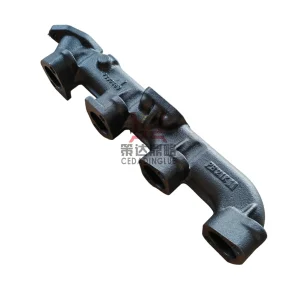
In the intricate ecosystem of internal combustion engines, the exhaust manifold gasket serves as a critical sentinel. As the primary seal between the cylinder head and the exhaust manifold, its role is to contain scorching exhaust gases—often exceeding temperatures of 800°C—and channel them safely into the after-treatment system. Today, the global market for these components is undergoing a massive transformation driven by stringent environmental regulations and the demand for higher engine efficiency.
Geographically, North America and Europe remain the largest consumers of high-performance gaskets due to their advanced automotive sectors and strict Euro 6/EPA standards. However, the Asia-Pacific region, led by China, has emerged as the manufacturing powerhouse. As a premier China OEM Exhaust Manifold Gasket Supplier, we have witnessed the shift from simple asbestos-based materials to sophisticated Multi-Layer Steel (MLS) and graphite-composite technologies. This shift isn't just about durability; it's about environmental stewardship, as leaking gaskets lead to increased emissions and reduced fuel economy.
Global demand is projected to grow as heavy-duty logistics and infrastructure projects increase in emerging economies.
Transitioning to MLS (Multi-Layer Steel) to handle extreme thermal expansion in modern turbocharged engines.
Advanced sealing solutions directly contribute to reducing carbon footprints by maintaining optimal backpressure.
The modern trend of engine "downsizing"—producing smaller engines with turbochargers to match the power of larger ones—has placed immense pressure on the exhaust system. Turbochargers increase the heat and vibration at the manifold interface. Consequently, the industry is moving away from single-layer gaskets toward Multi-Layer Steel (MLS) designs. These gaskets feature multiple layers of spring steel coated with high-temperature polymers like Viton, allowing the gasket to "breathe" with the thermal expansion and contraction of the engine block.
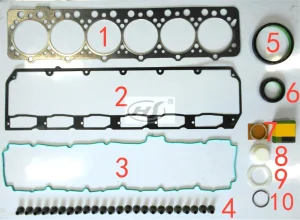
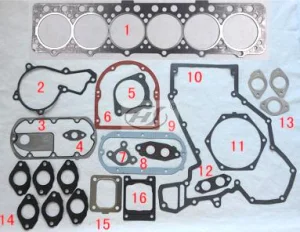
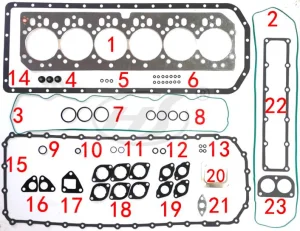
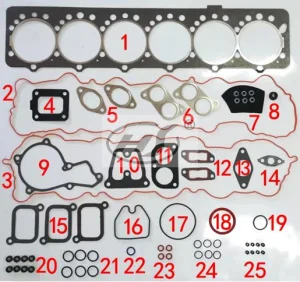
Our flagship stainless steel exhaust manifold gasket kits are engineered for durability. Utilizing premium grade steel, these gaskets provide exceptional resistance to blowout and thermal fatigue. Ideal for heavy-duty applications and passenger vehicles alike, they ensure a perfect fit and leak-free performance even under extreme pressure.
Key Applications: Automotive repair, OEM replacement, and high-performance engine tuning.
B2B procurement officers in the automotive and heavy machinery sectors are no longer just looking for the lowest price. They are seeking reliability and batch consistency. A single gasket failure in a mining truck or a marine vessel can lead to thousands of dollars in downtime. Therefore, global buyers prioritize suppliers who hold IATF 16949 certifications and offer comprehensive Quality Control (QC) traceability. They need partners who can provide technical documentation, material certifications, and rapid prototyping for custom engine designs.
Choosing a China Exhaust Manifold Gasket Manufacturer offers a unique combination of scale, speed, and technological prowess. Our facility, with over 30 years of experience, integrates the entire production lifecycle. From raw material sourcing to precision CNC machining and robotic assembly, we control every variable to ensure that our aftermarket and OEM parts match or exceed the performance of original equipment.
1. Curated Supply Chain: We don't just manufacture; we manage. Our integrated supply chain ensures that we have access to high-grade graphite and aerospace-grade steel even when global markets fluctuate. This stability is passed down to our clients in the form of consistent pricing and lead times.
2. Engineering-Grade Matching: With a team of 10+ senior engineers, we assist our clients in part matching by serial number, engine model, or even site photos. This reduces the risk of incorrect orders—a common pain point in the international trade of engine components.
3. Advanced Manufacturing Lines: Our factory utilizes gravity casting and intelligent machining lines with over 1,000 CNC centers. This allows us to produce complex geometries for both intake and exhaust manifolds with micron-level precision.
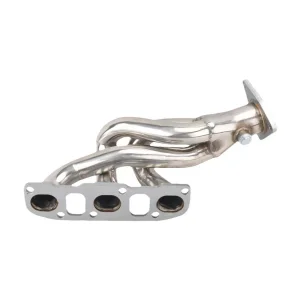
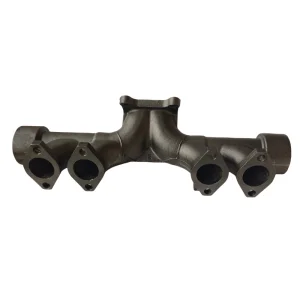
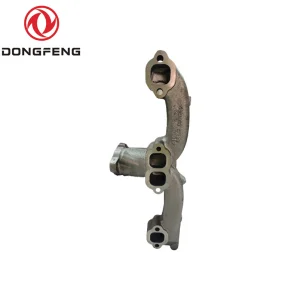
When standard parts won't suffice, our custom casting services provide the solution. We specialize in stainless steel and cast iron manifolds for turbocharger systems, designed to optimize gas flow and withstand the harshest industrial environments. Our AI-driven design process ensures optimal thermal distribution and longevity.
Certifications: ISO 9001, IATF 16949 compliant manufacturing.
Equipped with state-of-the-art CNC machining centers, robotic automation, and precision testing systems, our factories deliver consistent, high-quality output at scale. Every process—from forging and heat treatment to assembly and final inspection—is guided by strict IATF16949 and ISO9001 quality standards.
Advanced foundry with Germany KW sand molding, low/high-pressure casting. Annual capacity exceeds one million cylinder blocks and heads.
30 advanced production lines with 1,000+ CNC centers, delivering precise machining for blocks, heads, and crankcases.
Equipped with LEITZ CMM, SPECTRO analyzer, and VDA6.3 certified labs to ensure OEM accuracy.
Our exhaust manifold gaskets and components are deployed across diverse sectors worldwide:
The choice of material for an exhaust manifold gasket is determined by the engine's operating temperature, vibration frequency, and the flange design. As a professional supplier, we provide several material options:
The gold standard for modern engines. MLS gaskets consist of two to five layers of spring steel, interleaved with sealing coatings. They are exceptional at handling the differential expansion between an aluminum cylinder head and a cast-iron exhaust manifold.
Ideal for older engine designs or irregular flange surfaces. Graphite has excellent natural lubricity and "creep" resistance, allowing it to seal gaps that steel might struggle with. Our graphite gaskets are reinforced with a perforated steel core for maximum blowout resistance.
Used in specialized industrial and marine applications where temperatures exceed 1000°C. Mica remains stable where other materials would oxidize and crumble.
While the rise of Electric Vehicles (EVs) is undeniable, the demand for Internal Combustion Engine (ICE) components remains robust, particularly in the heavy machinery, maritime, and long-haul transport sectors. The focus has shifted toward Lifecycle Cost (TCO). Our gaskets are designed to extend the service intervals of these engines, reducing the frequency of costly repairs and ensuring that existing fleets can meet modern environmental standards through better sealing and combustion efficiency.