Dominion Parts
Dominion Parts
Dominion Parts
In the contemporary industrial landscape, the oil pressure sensor has evolved from a simple mechanical gauge to a critical electronic component that serves as the "heartbeat monitor" for engines and hydraulic systems. Globally, the demand for high-precision oil pressure sensors is surging, driven by the increasing complexity of internal combustion engines and the rigorous efficiency requirements of heavy industrial machinery.
From the bustling construction sites in North America to the massive mining operations in Western Australia, the ability to monitor real-time oil pressure is the difference between seamless operation and catastrophic engine failure. As a leading China OEM oil pressure sensor manufacturer, we recognize that the global market is no longer just looking for a "part"—they are looking for data accuracy, thermal stability, and long-term durability in extreme environments.
Sensors are now integrated with telematics systems to provide predictive maintenance alerts.
Micro-Electro-Mechanical Systems allow for smaller, more accurate, and cheaper sensors.
Hydrogen and biofuel engines require specialized sensors to handle different chemical properties.
The shift toward "Industry 4.0" has made oil pressure sensors more intelligent. Modern sensors must communicate with the Engine Control Unit (ECU) via CAN-bus protocols, providing not just pressure readings but also temperature data and self-diagnostic reports. This integration reduces downtime by allowing fleet managers to predict failures before they occur. Furthermore, the push for lower emissions has forced engine manufacturers to operate at higher temperatures and pressures, necessitating a new generation of robust sensor materials.
With 30 years of experience, we are a trusted supplier of OEM-quality engine components. Our advanced factories in China, ISO-certified quality systems, and strong R&D team ensure precision, reliability, and durability.
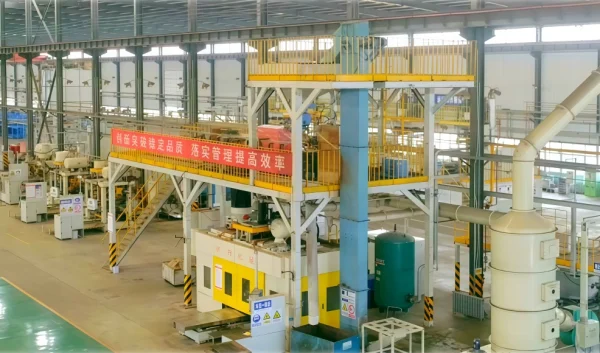
Our factory is equipped with state-of-the-art CNC machining centers, robotic automation, and precision testing systems. Every process—from forging and heat treatment to assembly and final inspection—is guided by strict IATF16949 and ISO9001 quality standards.
B2B buyers, particularly from the Middle East, Europe, and Southeast Asia, face significant challenges when sourcing oil pressure sensors. Key concerns include consistency of quality, lead times, and technical compatibility. Global enterprises require a supplier that understands international trade compliance, provides DDP/FOB/EXW terms, and offers comprehensive documentation.
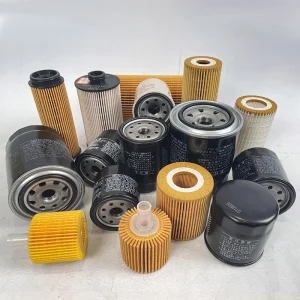
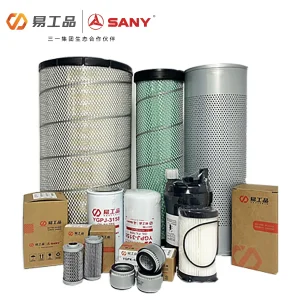
Construction & Mining: Sensors must withstand vibration and extreme dust. Our heavy machinery filters and sensors are designed for excavators like the PC200-8mo and various Komatsu models.
Marine Industry: Resistance to salt spray and high humidity is essential for oil pressure monitoring in large vessel engines.
Trucking & Logistics: High-mileage durability for fleets of Toyota, Nissan, and Honda commercial vehicles.
Fast Dispatch for Core SKUs in safety stock.
Senior Engineers for engineer-grade part matching.
Countries served with verified logistics.
Repeat purchase rate from industry leaders.
Quality oil pressure sensors rely on high-grade sensing elements, often utilizing piezoresistive or capacitive technology. The housing must be crafted from corrosion-resistant materials like 316L stainless steel or high-tensile brass to ensure it can handle the pressure cycles of a heavy-duty engine. As a China Oil Pressure Sensor Supplier, we focus on the calibration of the Wheatstone bridge within the sensor to guarantee that signal output remains linear even under fluctuating temperatures (ranging from -40°C to +150°C).
Furthermore, the sealing mechanism (O-rings and gaskets) is a critical failure point in cheaper alternatives. Our sensors use fluororubber (Viton) seals, ensuring they remain leak-proof when exposed to synthetic oils and aggressive additives common in modern lubrication systems.