Dominion
Dominion
Dominion
In the high-stakes world of internal combustion engines and industrial machinery, the Push Rod remains a critical component for valve train reliability. As a leading China Push Rod Factory, we have witnessed the evolution of this component from simple mechanical links to highly engineered precision parts. Global industrial demand for push rods is currently driven by the heavy-duty automotive, agricultural, and power generation sectors where Over-Head Valve (OHV) engines are preferred for their compact design and high torque density.
Today's global commercial status of push rods shows a shift toward high-performance materials. Manufacturers in Europe and North America are increasingly sourcing from specialized OEM Push Rod Suppliers who can offer batch-level traceability and IATF 16949 certification. The demand is not just for standard sizes but for customized solutions that can withstand the extreme thermal and mechanical stresses of modern turbocharged engines.
One of the most significant trends in the push rod industry is the move toward lightweight materials. Carbon fiber and advanced chrome-moly alloys are becoming standard in high-end racing and aerospace applications. Reducing the reciprocating mass of the valve train allows for higher RPMs and better fuel efficiency, which is a top priority for global OEMs.
International buyers, particularly from the US, Germany, and Japan, are focusing on "supply chain resilience." This means they require suppliers who can offer more than just low costs; they need Engineer-grade Part Matching and rapid prototyping. The ability of a China Push Rod Supplier to integrate into a global digital supply chain—providing real-time stock updates and transparent QC reports—is now a decisive factor in long-term procurement contracts.
ISO system, batch traceability, and inbound sampling ensure stable and consistent quality for every push rod produced.
Core SKUs in safety stock, rush handling for urgent POs, and flexible global logistics options (DDP/FOB/EXW).
10+ senior engineers match parts by model, serial number, or photos to ensure 100% accuracy in fitment.
Three decades of manufacturing excellence in OEM-quality engine components and heavy equipment parts.
1. Mining & Construction (Australia & Africa): In the harsh environments of open-pit mines, engine downtime is incredibly costly. Our high-strength push rods are engineered to withstand the dust and extreme heat typical of mining operations in the Outback or the Sahara, ensuring that excavators and haul trucks run longer between maintenance cycles.
2. Marine Power Systems (SE Asia & Mediterranean): For marine applications, corrosion resistance is as important as mechanical strength. Our push rods for 2-stroke and 4-stroke marine engines feature specialized coatings to prevent oxidation in salt-heavy environments.
3. Precision Agriculture (North & South America): Modern tractors require highly efficient engines. We provide OEM push rods that help maximize torque at low RPMs, essential for heavy tilling and planting operations across the US Midwest and the Brazilian Cerrado.
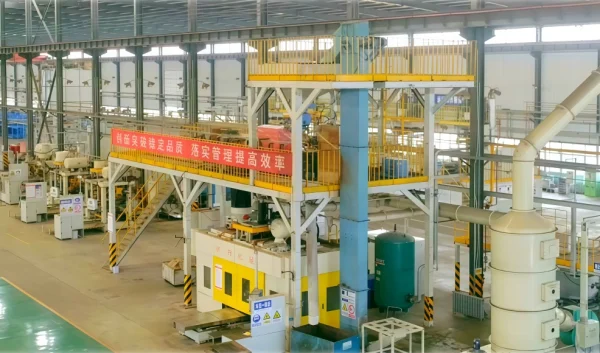
Advanced foundry with Germany KW sand molding, low/high-pressure and gravity casting lines. Annual capacity exceeds one million units, ensuring reliable OEM supply.
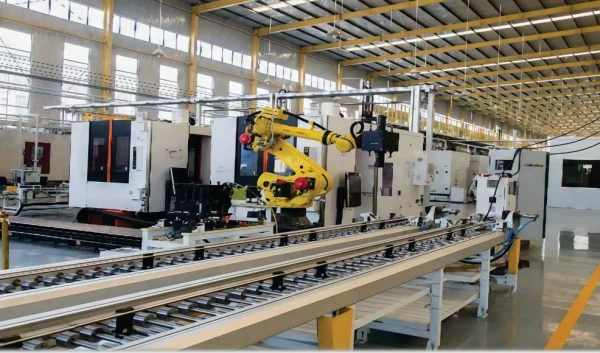
30 advanced production lines with 1,000+ CNC centers and robotic automation, delivering precise machining of engine blocks, heads, and push rod assemblies.
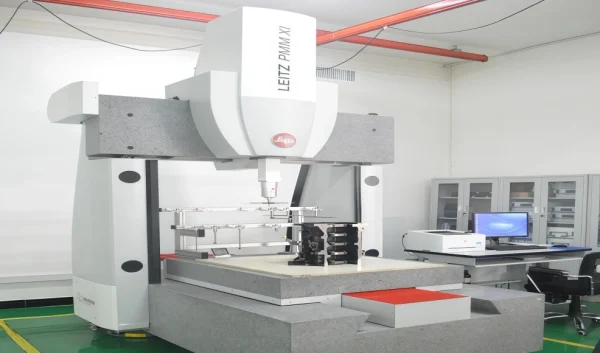
Equipped with LEITZ CMM and SPECTRO analyzers to ensure every component meets global OEM standards for accuracy and durability.
On-time Delivery
Repeat Purchase Rate
QC Pass Rate
Countries Served
The engineering behind a high-quality push rod is far more complex than it appears. At our China Push Rod Factory, the process begins with material selection. For standard commercial engines, we typically use 1010 or 1020 carbon steel tubing. However, for heavy-duty applications, 4130 or 4340 chromoly steel is preferred due to its superior strength-to-weight ratio. The tubing must be cold-drawn to precise tolerances to ensure consistent wall thickness, which is vital for preventing rod deflection at high loads.
Heat treatment is the next critical step. Through induction hardening or carburizing, we achieve the necessary surface hardness at the rod ends—where they meet the lifter and the rocker arm—while maintaining a ductile core to absorb vibration. This prevents the ends from "mushrooming" or the rod from snapping under the rapid-fire impact of high-RPM operation. Our factory utilizes computerized atmospheric furnaces to ensure uniform heat distribution during every batch.
In the realm of OEM push rod supply, end-piece attachment is another area of specialization. We employ friction welding or advanced press-fit techniques with interference tolerances measured in microns. Friction welding, in particular, creates a molecular bond between the tube and the end piece that is often stronger than the parent material itself. This is especially important for push rods used in high-pressure diesel engines and performance racing engines.
Quality control at our facility isn't just a final check; it's integrated into every station. Using eddy current testing, we can detect internal flaws or hairline cracks in the steel that are invisible to the naked eye. For our global B2B clients, this level of scrutiny translates to reduced warranty claims and higher customer satisfaction. We understand that in the heavy machinery industry, the cost of a part is secondary to the cost of the downtime its failure causes. This philosophy drives our commitment to "Zero Defect" manufacturing.
Furthermore, as the industry moves toward greener technology, we are exploring eco-friendly plating options. Zinc-nickel coatings provide excellent corrosion resistance without the environmental impact of traditional hexavalent chrome. This allows our products to comply with REACH and RoHS regulations, making them suitable for the strictly regulated European and North American markets.
Our R&D team is also working on "Smart Valve Train" components. While a push rod is traditionally a passive part, we are experimenting with sensors that can monitor rod strain in real-time for industrial stationary engines. This predictive maintenance data can alert operators to potential failures before they happen, a revolutionary step for the power generation and oil & gas sectors.