Dominion Parts
Engineered components trusted by mining, construction, automotive, and industrial buyers worldwide.

China Factory for BMW N55 Black Aluminum Intake Manifold
View Product →
China Factory Wholesale Mercedes Auto Multifunctional Intake Manifold 6421500494 for Benz Sprinter
View Product →
Imported Glass Fiber Hydraulic Oil Filter Machine 0015D010bh4hc 1320d010bh4hc 1300r010V 1700r050W
View Product →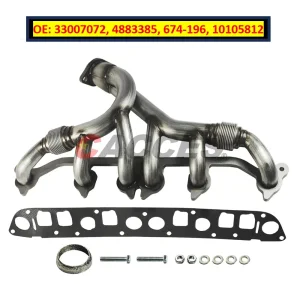
New Stainless Steel Exhaust Manifold & Gasket Kit Replacement for Grand Cherokee Wrangler 4.0L
View Product →
Genuine Engine Denso 4holes Peugeot Fuel Injector OEM Iwp006 for Car
View Product →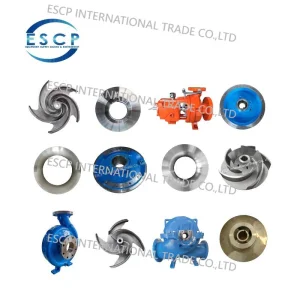
Itt Goulds 3180 3185 3196 China Replacement Repair Spare Centrifugal Pulp Paper Slurry Oil Pump Parts
View Product →
Diesel Engine Electric Motor Industrial High Pressure Horizontal Booster Centrifugal Bombas De Agua Water Pump
View Product →
23501576 23501577 Engine Valve for Detroit 60 Series Engine Valves Kit Diesel Engine Spare Part
View Product →Understanding the engineering, standards, and supply-chain realities behind every wholesale starter relay order.
A starter relay is one of the smallest components in the electrical architecture of a vehicle, generator, or piece of heavy machinery — yet it is also one of the most consequential. It sits between the ignition switch and the starter motor, converting a low-current driver signal into the high-current pulse needed to crank an engine. When a starter relay fails, the entire machine stops. For fleet operators, mining contractors, agricultural businesses, and OEM assemblers, this means downtime, missed schedules, and unpredictable maintenance costs.
That is why sourcing from competent Wholesale Starter Relay Manufacturers is not a low-priority procurement task — it is a strategic engineering decision. This guide, developed by SEO and manufacturing specialists who have reviewed thousands of B2B sourcing inquiries, distills the technical, commercial, and compliance realities that separate reliable suppliers from risky ones. It is written for procurement managers, engineers, and distributors who need an information-dense, E-E-A-T compliant reference they can act on.
Whether you are a distributor adding starter relays to a catalog, an aftermarket brand looking for a reliable Chinese factory, or an OEM seeking secondary supply, this guide is designed to answer the questions that actually influence purchasing decisions — from localized applications and technical roadmaps to supply-chain resilience, compliance, and future trends.
We address delivery, quality, cost, and engineering support to establish trust with every order.
ISO-aligned quality system, batch traceability, and inbound sampling at every step — stable and consistent quality across every shipment.
Core SKUs kept in safety stock, rush handling for urgent POs, and flexible global logistics to protect your production schedule.
10+ senior engineers match components by model, serial number, or photos — delivering high accuracy where catalogs fall short.
DDP / FOB / EXW terms with complete customs and compliance documentation for smooth cross-border transactions.
ISO / CE-certified processes with real deployments across mining, construction, and port machinery industries.
OEM-level precision and reliability while balancing total cost of ownership — quality that pays back across the asset lifecycle.
Independently tracked operational metrics — the numbers behind every shipment.
How the same core relay technology is adapted to regional duty cycles, climates, and regulatory environments.
Starter relay design is rarely “one-size-fits-all.” A relay that performs flawlessly in a temperate European passenger car may fail within weeks when exposed to the humidity, vibration, and thermal cycling of a Sub-Saharan mining haul truck. This is why serious manufacturers build localized design variants rather than a single global SKU. Below is an engineering-grade view of how starter relays are tuned for specific markets and applications.
Long-haul Class 8 trucks and European heavy haulers require relays rated for high inrush currents, SAE J1455 vibration standards, and IP67 sealing. Localized variants often include reinforced contact plating for extended cranking cycles.
Dust ingress, high ambient temperatures (50°C+), and heavy shock loads demand conformal-coated PCBs, sealed housings, and mechanical latching designs. Localized assembly typically uses tropicalized insulation.
High-humidity environments and monsoon cycles stress relay insulation resistance. Localized designs emphasize anti-moisture potting and corrosion-resistant terminals for tractors and harvesters.
Salt fog exposure requires stainless mounting hardware, sealed relays, and salt-spray-tested coating per ASTM B117. Port cranes and RTG units rely on these hardened variants.
Sub-zero cranking (-40°C) requires contacts that resist stiction and low-temperature lubricants. Localized variants prioritize reliable cold-crank performance and condensation-resistant enclosures.
High ambient heat and continuous duty cycles push thermal management limits. Localized designs use higher-temp-rated coils and enhanced heat dissipation in enclosure layout.
From electromechanical relays to solid-state and smart diagnostics integration — where the industry is heading.
The starter relay industry is undergoing structural change. While traditional electromechanical relays remain dominant due to cost and proven reliability, three technological trajectories are reshaping the roadmap between 2024 and 2030:
Manufacturers are focusing on reducing contact resistance, improving heat dissipation in high-current paths, and extending relay life to 500,000+ cycles. Materials like silver-nickel and silver-tin-oxide contacts, combined with improved coil winding, are becoming the default for premium wholesale starter relay lines.
The next wave integrates current-sensing and fault-reporting features directly into relay housings. This allows OEMs to detect early contact wear via CAN bus, and fleet managers to schedule preventive replacement before a failure. For large fleets, this alone can reduce unplanned downtime by 20–35%.
Solid-state relays — MOSFET-based and increasingly SiC-based — offer near-infinite cycle life, silent operation, and instant switching. Though currently costlier, they will become the default for high-voltage commercial vehicles, EVs, and autonomous industrial platforms. Hybrid designs that combine electromechanical and semiconductor switching are already in OEM pilot programs.
Buyers planning multi-year contracts should ask suppliers for their roadmap documentation. A forward-looking manufacturer will have one; a pure trading company rarely will.
Why China remains the world's most capable source for wholesale starter relays — and how resilience is engineered, not assumed.
The conversation around Chinese manufacturing has matured. Rather than a single cost narrative, serious buyers now evaluate resilience, engineering depth, and scale. On all three fronts, Chinese starter relay factories have demonstrated remarkably consistent performance, especially when compared to fragmented sourcing across smaller regional suppliers.
From contact material stamping, coil winding, plastic molding, and assembly to final testing — top-tier Chinese factories handle every process in-house. Vertical integration removes the layers of subcontracting that introduce reliability risk in other supply chains. It also accelerates engineering changes and shortens lead times.
A typical high-output factory holds 30+ production lines, 1,000+ CNC centers, automated optical inspection, and X-ray verification for solder joints. Combined with mature SMT and IATF 16949-aligned quality systems, these operations deliver throughputs that most regional suppliers simply cannot match — often at 20–40% lower landed cost while maintaining OEM-level quality.
China's industrial ecosystem has emerged stronger from recent global disruptions. Multiple-port shipping access, integrated logistics providers, and mature cross-border compliance infrastructure allow factories to keep goods flowing even under constraint. Buyers should specifically ask about:
These are the practical metrics of resilience. Factories that can answer them with evidence — not verbal assurances — are the ones worth contracting with.
Market dynamics shaping demand for wholesale starter relays across regions.
Strong aftermarket growth driven by aging light-truck and heavy-duty fleets; increasing demand for remanufactured-grade quality from new suppliers.
Regulatory pressure (Euro 7) pushing OEMs toward higher-reliability components; aftermarket consolidation favors suppliers with full documentation and CE compliance.
The largest growth region — construction, mining, and agricultural equipment demand are rising fastest, with India and ASEAN as core volume markets.
Heavy infrastructure growth plus oil and gas operations drive demand for hardened relays; buyers prioritize durability and after-sales support over pure cost.
Globally, the starter relay aftermarket is estimated to grow at a CAGR of approximately 4.5–5.5% through 2030, driven by fleet aging, infrastructure investment, and tightening replacement-cycle standards. OEM supply remains concentrated but is gradually opening to qualified Chinese suppliers — largely due to demonstrated quality, certifications, and documented track record.
For B2B buyers, this means the strategic window is favorable: competition among wholesale starter relay manufacturers is healthy, but quality differentiation — not price — is now the decisive factor. Factories investing in IATF 16949, traceability, and engineering depth will consolidate the market; trading companies without those assets will be filtered out.
What global buyers should expect from a serious wholesale starter relay manufacturer.
IATF 16949 / ISO 9001 quality system with documented audit trail
CE / RoHS / REACH compliance with declaration of conformity
Regional documentation for customs — CO, packing list, HS codes
DDP / FOB / EXW incoterms available with costed routing options
Local-language catalogs and technical documentation (EN, ES, FR, DE, AR)
Warranty terms matched to regional duty cycles (12–24 months typical)
Engineer-supported part matching for catalogs, VIN, or photo identification
Batch-level traceability retrievable by serial number for QC audits
Pre-shipment testing data — inrush current, contact resistance, durability cycles
After-sales support in local business hours for key accounts
State-of-the-art CNC machining centers, robotic automation, and precision testing — engineered for consistent, high-quality output at scale.
Every process — from forging, heat treatment, and assembly to final inspection — is guided by IATF 16949 and ISO 9001 quality standards. Our engineering team ensures each component not only meets but consistently exceeds international OEM requirements for performance, durability, and lifespan.
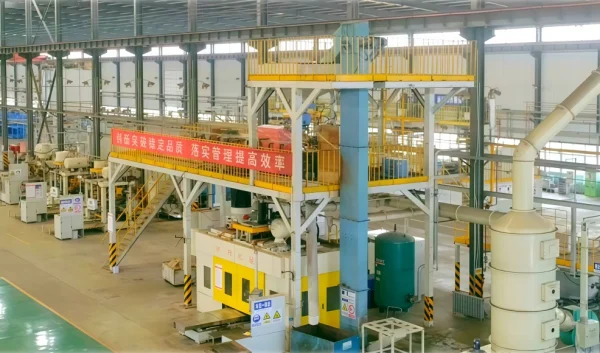
Advanced foundry with Germany KW sand molding, low/high-pressure and gravity casting lines. Annual capacity exceeds one million cylinder blocks and heads, ensuring reliable OEM and aftermarket supply.
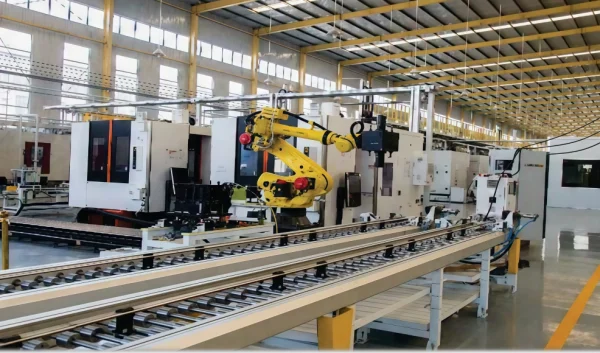
30 advanced production lines with 1,000+ CNC centers, honing machines and specialized equipment, delivering precise, efficient machining of engine blocks, heads, crankcases, and new-energy housings.
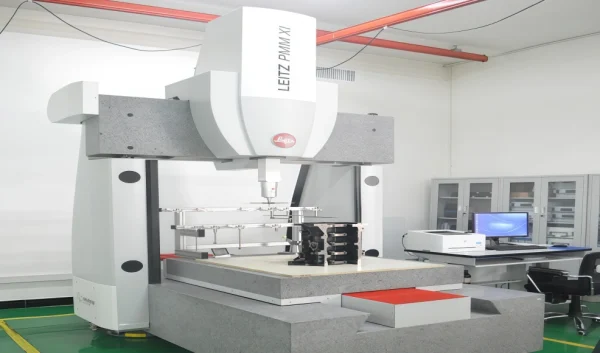
Equipped with LEITZ CMM, SPECTRO analyzer, Talyrond, Hommel profiler, and VDA6.3 certified lab, ensuring every engine component meets global OEM standards for accuracy and durability.
Explore the full catalog of engine, industrial, and heavy equipment components.
Three decades of engineering excellence — from one supplier relationship to a global network of partners.
With 30 years of experience, our manufacturing ecosystem stands as a trusted supplier of OEM-quality engine components and industrial parts. Advanced factories in China, ISO-certified quality systems, and a strong R&D team ensure precision, reliability, and durability at scale. Supported by a global distribution network, we deliver fast, customized solutions that help partners reduce downtime, control costs, and stay competitive worldwide.
Match by model, serial number, or photos — high accuracy where catalogs fall short.
Every production lot is documented and traceable for audits and warranty control.
Private-label, custom packaging, and engineering customization supported end-to-end.
Three decades of manufacturing, export, and engineering know-how behind every shipment.
DDP / FOB / EXW routing, courier, air freight, and full-container FCL support.
Same-day quotations and safety stock on core SKUs for urgent POs.
Automotive-grade quality management system certified and audited.
Serving 65+ countries across OEM programs and independent aftermarket brands.
* Brand names are used for reference only and do not imply direct endorsement.
Answers procurement teams, engineers, and distributors ask most often about wholesale starter relays.
Prioritize (1) IATF 16949 or ISO 9001 certification, (2) documented batch traceability, (3) evidence of in-house engineering and testing, (4) reference customers in your region or industry, and (5) transparent incoterms and warranty policy. A manufacturer that cannot provide these is effectively a trading company with hidden quality risk.
MOQ varies widely. For standard SKUs, many factories accept MOQs of 100–500 units per part number. For OEM-branded or customized relays, MOQs generally start at 500–1,000 units. Asking for MOQ by SKU — rather than an average number — will give you a far more accurate commercial picture.
Heavy-machinery relays are engineered for higher inrush current, extended duty cycles, and harsher environments. They typically feature sealed housings (IP67 or higher), higher temperature ratings, enhanced contact materials, and mechanical reinforcement against vibration. Reusing passenger-car relays in heavy equipment dramatically increases failure rate.
Yes — for any serious manufacturer. CE and RoHS declarations are standard; REACH documentation, INMETRO certification (Brazil), and DOT-related labeling can be supported on request. Verify by asking for prior certificates and third-party test reports, not just declarations.
Typical production lead times for stock SKUs are 5–10 business days; custom SKUs are 20–35 days. Shipping by sea (FCL/LCL) is 25–45 days to most ports; air freight is 5–10 days. DDP, FOB, and EXW terms are all commonly supported, with DDP increasingly preferred by first-time importers.
Standard warranty is 12–24 months depending on application and duty cycle. Serious suppliers provide replacement or credit programs for verified defects, documented RMA procedures, and technical support in your business hours. Ask for previous RMA case examples to gauge responsiveness.
A capable factory performs inrush current testing, contact resistance measurement, endurance cycling, insulation resistance, and visual/AOI inspection. Request pre-shipment test data — a serious manufacturer will provide it as part of the QC package, not on an exceptional basis.
Yes. Private-label programs typically include custom laser marking, packaging design, branding on the relay housing, and dedicated batch documentation. MOQs for such programs are usually higher (500–2,000 units), and development timelines are 20–45 days for first article approval.
Verified stock, engineer-supported matching, and global shipping — browse the full range.

Supplier of Flowmeter Radiant Under Floor Pex Heating Manifold with Stainless Exhaust Thermostat Water Pipe
View Product →
Ap-Jsw Brand High Quality 15100-35020 for Toyota Oil Pump
View Product →
Auto Parts Fuel Injector Nozzle Ssangyong Motor Engine Parts 6640170121
View Product →
Hybrid Turbocharger K04-0064 Gtx2867 Ball Bearing Turbine Racing 53049880064 for Volkswagen Scirocco 2.0 R TSI
View Product →
Life Low Extractables 20" 0.45 Micron PES Filter Cartridge for Vegetable Oil Filtration
View Product →
Heavy Duty Vehicle Brake Drum Shafts Expansion Shafts Separation Shafts Brake S-Camshaft for Tata BPW Light Trucks
View Product →
Truck Auto Crawler Tractor Loader Excavator Brake Pneumatic System Air Dryer Cartridge Construction Machinery Filter Parts
View Product →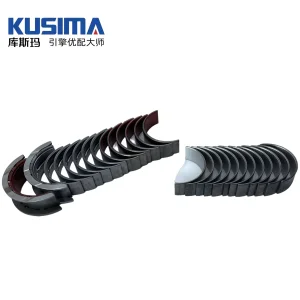
OEM Quality B58 Engine Parts Coated Crankshaft Main Bearing Connecting Rod Bearing for BMW B58b30 3.0
View Product →Send us your part numbers, VINs, or photos — our engineers will respond with a verified quotation within 24 hours.
Get a Free Quote →