The Strategic Guide to Modern Industrial Heat Exchangers
An authoritative whitepaper analyzing thermodynamic efficiency, structural integrity, and global sourcing parameters in complex thermal processing applications.
Executive Summary: Modern thermodynamic infrastructure demands optimized heat transfer systems that operate under high pressures, corrosive environments, and variable flow regimes. Identifying the correct heat exchanger supplier involves analyzing manufacturing compliance (ASME/PED), raw material metallurgy, engineering design capabilities, and supply chain reliability. This guide provides technical insights to support procurement and design decisions for high-performance heat exchange applications.
1. Thermodynamic Principles & Mechanical Configurations
Heat exchangers are critical in managing thermal loads, recovering energy, and maintaining process temperatures across industrial sectors. Choosing the appropriate design depends on specific fluids, pressure drops, and thermal requirements:
- Gasketed Plate Heat Exchangers (GPHE): Feature alternating corrugated plates with elastomeric gaskets. Their high turbulence yields heat transfer coefficients (U-values) up to three times higher than shell-and-tube designs, making them suitable for low-to-medium pressure liquid-to-liquid processes.
- Shell & Tube Heat Exchangers (STHE): Consist of a bundle of tubes housed within a cylindrical shell. Highly adaptable, they tolerate pressures exceeding 300 bar and temperatures above 600°C. Standard configurations (e.g., TEMA type AES or BEM) allow for thermal expansion and facilitate maintenance.
- Brazed Plate Heat Exchangers (BPHE): Eliminate gaskets by vacuum-brazing stainless steel plates with copper or nickel filler. They offer compact size and high pressure capabilities, making them suitable for HVAC, refrigeration, and clean water applications.
- Air-Cooled Heat Exchangers (Fin-Fan): Direct ambient air across finned tube bundles to cool process streams without water consumption, commonly used in oil refineries, petrochemical plants, and power stations.
2. Manufacturing Advantages of Chinese Heat Exchanger Factories
Chinese manufacturers have transitioned from low-cost casting to high-precision, automated production. The key advantages of sourcing from modern Chinese plants include:
- Integrated Supply Chain & Metallurgy: China accounts for a significant share of global stainless steel and titanium production. Industrial hubs in Jiangsu, Zhejiang, and Guangdong provide direct access to raw materials (including ASTM A240 316L, Duplex 2205, Hastelloy C276, and titanium Grade 2), reducing material lead times.
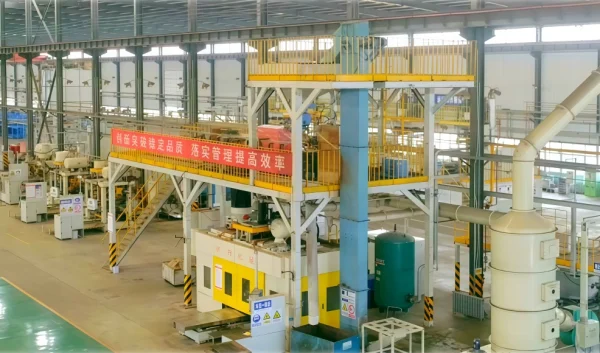
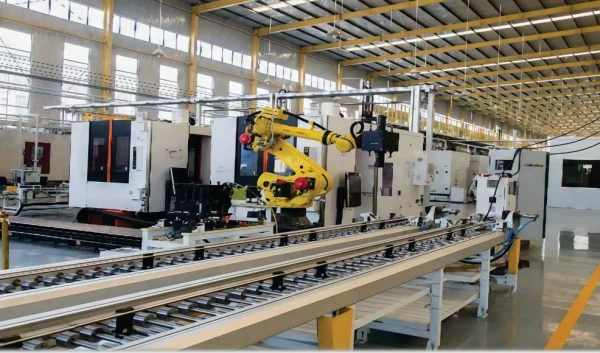
- Precision Welding and Automated Stamping: Advanced facilities utilize automated multi-spindle CNC drilling, robotic orbital TIG/MIG welding, and high-tonnage hydraulic presses (up to 20,000 tons) for plate corrugation. This ensures structural uniformity and reduces stress-induced cracking.
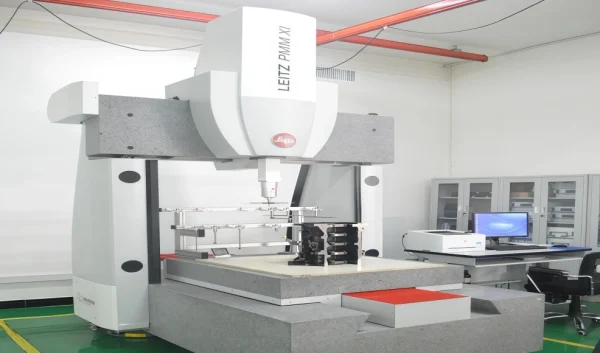
- Rigorous Testing Protocols: Quality control matches international standards, including automated helium mass spectrometer leak detection, hydrostatic pressure testing up to 1.5x design pressure, and non-destructive testing (NDT) such as digital radiography and dye penetrant testing.
3. Macro Industrial Solutions & Application Scenarios
Custom-engineered thermal systems support operational stability in demanding applications:
- Petrochemical & Gas Processing: Heavy-wall shell-and-tube exchangers utilize corrosion-resistant alloys to handle high-sulfur crude, hydrocarbon cracking, and acid gas stripping.
- Power Generation & Renewable Energy: Surface condensers and feed-water heaters maximize thermodynamic efficiency in steam cycles. In green hydrogen systems, compact heat exchangers regulate temperature profiles during electrolysis and high-pressure storage.
- Sanitary Food, Beverage & Pharmaceutical Systems: Double-tubesheet and multi-pass shell-and-tube designs prevent cross-contamination. Surfaces are electropolished (Ra < 0.4 μm) to comply with FDA and EHEDG sanitary standards.
- Heavy Equipment & Engine Cooling: Radiators, charge-air coolers, and lube oil coolers maintain operational temperatures in marine vessels, mining haul trucks, and diesel generator sets, preventing thermal degradation.
4. Navigating Global Procurement and Compliance
Procuring custom pressure vessels requires compliance with regional safety frameworks. Global buyers verify manufacturers against several key credentials:
- ASME Section VIII Division 1: The primary international code for pressure vessel design, fabrication, and inspection. Certified suppliers display the "U" or "UM" stamp.
- European Pressure Equipment Directive (PED 2014/68/EU): Mandatory for pressure equipment operating within the European Economic Area (CE marking).
- Material Traceability: Suppliers must provide Certified Material Test Reports (MTRs) according to EN 10204 3.1 or 3.2, verifying chemical composition and mechanical performance back to the steel mill heat number.
 Dominion Parts